Training programs

Service dog training built around the handler's real access needs.

The team emphasizes obedience, disability-related task training, public access manners, and handler consistency rather than quick documents or shortcuts. This is boutique private training in Pennsylvania with selective intake and appointment-based sessions.

Owner-handler coaching

Owner-handler coaching is for clients who already have a dog and need a structured plan. A trainer evaluates the dog, identifies training gaps, and coaches the team through practical work that can be maintained at home and in public.

  • Behavioral evaluation and suitability discussion
  • Foundation obedience and leash handling
  • Task selection around the handler's disability-related needs
  • Public access practice in realistic environments
  • Travel readiness routines and handler preparation
Trained service-dog placement

Trained service-dog placement may be available for clients who need a dog the company has prepared for service work. Placement includes matching, handler transfer, coaching, and follow-up so the dog and handler can work as a team.

  • Temperament and health suitability review
  • Task and lifestyle matching
  • Public manners and transport preparation
  • Handler transfer sessions
  • Follow-up support after placement
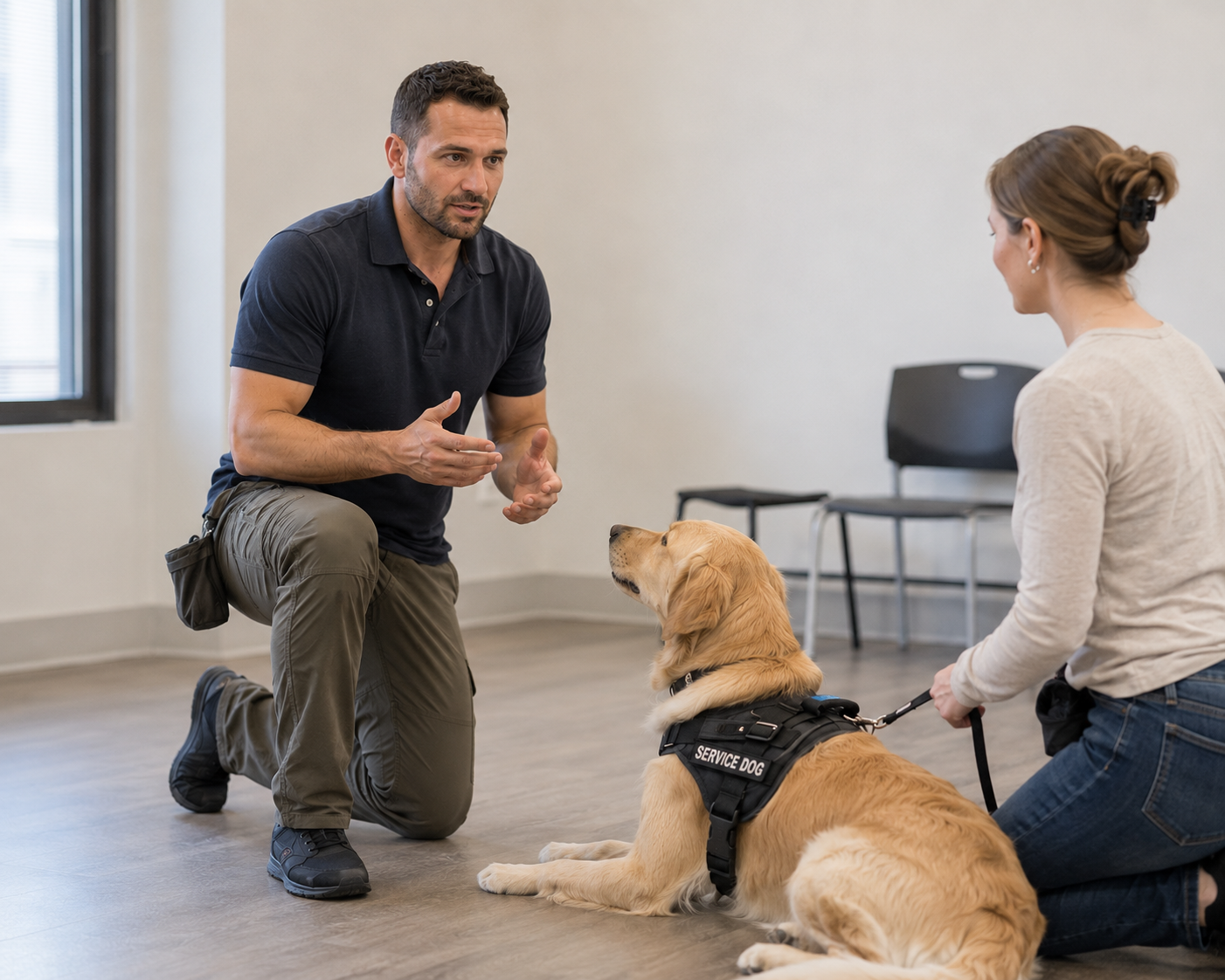
Greg coaching a handler and service dog during a training session

Psychiatric service dog task work

A psychiatric service dog performs trained tasks related to a handler's disability. An emotional support animal may help by presence or comfort, but comfort alone is different from trained public-access service work.

Grounding responseReturning attention to the handler.
Interruption workInterrupting panic, freezing, or harmful patterns.
Routine supportMedication reminders and guided transitions.

Training records

Documentation follows evaluation. It does not replace training.

When appropriate, the training team may provide records, progress summaries, behavior observations, or handler notes after working with a team. The language stays practical: what was trained, what was observed, and what still needs maintenance.

Placement and transfer

Prepared dogs require matching, handler transfer, and follow-up.

When a trained service-dog placement is considered, the company reviews the dog's temperament, health suitability, task fit, public behavior, and match with the handler's needs. Placement work should include handler transfer sessions, maintenance coaching, follow-up support, and clear discussion of whether the match remains appropriate over time.

Fit and pacing

Some teams need foundation work before service-dog training moves forward.

The trainers work with a wide range of handler needs, but the dog still has to be safe, steady, and able to learn in the environments being requested. If a dog is overwhelmed, reactive, or not ready for public settings, the plan may start with obedience, neutrality, confidence, and handler structure before advancing to service tasks.